When your baby smiles with that first tiny tooth, it’s a moment of pure joy. But beyond the cute photos, tracking the progression of your baby’s teeth is a vital component of their overall health and development.
Many parents assume teething is just a natural process that happens without need for observation. However, pediatric dentists emphasize that monitoring eruption patterns provides crucial insights into potential health issues, nutritional readiness, and developmental milestones.
Here’s why keeping a simple record of your baby’s teeth status is one of the most impactful habits you can adopt.
1. Early Detection of Developmental Delays
While every child develops at their own pace, there are established medical windows for tooth eruption that serve as important health indicators.
- The Typical Timeline: Most babies get their first tooth between 4 and 7 months. By age 3, most children have all 20 primary teeth.
- The Red Flag: The American Academy of Pediatric Dentistry (AAPD) recommends a dental evaluation if no teeth have erupted by 18 months. This delay (called "delayed eruption") can sometimes signal underlying conditions such as:
- Hypodontia (congenitally missing teeth)
- Endocrine disorders (e.g., hypothyroidism)
- Nutritional deficiencies (e.g., Vitamin D or calcium)
- Genetic syndromes
Why Tracking Status Helps: Without a clear record, it’s easy to lose track of exactly when you first noticed signs of teething or when a tooth actually broke through. By simply logging the status change from "None" to "Coming Soon" and finally to "Emerged", you create an accurate timeline. This data is invaluable during pediatric visits, allowing doctors to assess whether your child’s development falls within healthy parameters or requires further investigation.
2. Decoding Behavior: Is It Teething or Illness?
Teething is notorious for causing fussiness, sleep regressions, drooling, and decreased appetite. However, these symptoms often overlap with signs of illness like ear infections or viruses.
Crucially, symptoms often appear before the tooth is visible:
- "Coming Soon" Phase: As the tooth moves under the gum, pressure builds, causing irritation 3–5 days before eruption.
- "Emerged" Phase: Once the tooth breaks through, acute pain usually subsides quickly.
The Power of Correlation: If you log that the status is "Coming Soon" and your baby suddenly becomes inconsolable or refuses food, you have immediate context. You can confidently attribute the behavior to teething rather than panic about a mysterious illness. Conversely, if the status has been "Emerged" for weeks and new severe symptoms appear (like high fever >100.4°F or diarrhea), you know it’s likely not teething and should seek medical care. This distinction prevents unnecessary doctor visits for normal teething while ensuring real illnesses aren’t ignored.
3. Guiding Nutrition and Safe Weaning
Teeth are functional tools for eating. The transition from gums to teeth fundamentally changes what your baby can safely chew and digest.
- Status: None / Coming Soon: Babies rely on gums to mash soft foods. Introducing hard textures too early can be a choking hazard.
- Status: Emerged (Incisors): Front teeth allow biting off soft pieces of food (e.g., ripe fruit, soft cheese).
- Status: Emerged (Molars): The arrival of molars is a game-changer. These back teeth are designed for grinding. Once they are "Emerged", your baby can safely handle more textured, chunky foods that require chewing, which is essential for jaw muscle development and speech preparation.
Tracking for Safety: By monitoring the status, you can time the introduction of new food textures appropriately. Knowing exactly when molars have erupted gives you the confidence to expand their diet, ensuring they receive the necessary nutrients for growth without risking choking.
4. Establishing Lifelong Oral Hygiene Habits
The AAPD recommends cleaning gums even before teeth appear and brushing twice daily as soon as the first tooth erupts.
Tracking the exact date the status changes to "Emerged" serves as a critical reminder to:
- Switch from a soft cloth to an infant toothbrush.
- Begin using a rice-grain-sized amount of fluoride toothpaste.
- Schedule the first dental visit (recommended by age 1 or within 6 months of the first tooth appearing).
Many parents forget the exact date the first tooth appeared, leading to delayed dental visits. A simple log ensures you never miss this window, setting the foundation for a lifetime of healthy smiles and preventing Early Childhood Caries (cavities).
5. Understanding the "Normal" Range vs. Anxiety
One of the biggest sources of parental anxiety is comparing their baby to others. "My friend’s baby has 8 teeth at 6 months, and mine has none!"
Tracking your own child’s progress helps you see their unique pattern. You might notice that while your baby was late to start ("None" for 8 months), once they started ("Coming Soon"), teeth appeared in rapid succession. Understanding your child’s specific rhythm reduces anxiety and helps you focus on their journey rather than external comparisons.
How Simple Logging Enhances These Benefits
You don’t need complex charts, photos, or detailed diagrams to reap these benefits. In fact, simplicity is key for consistent tracking.
This is where a streamlined approach shines. Apps like Note Baby focus on the essentials: logging the status as Coming Soon, None, or Emerged.
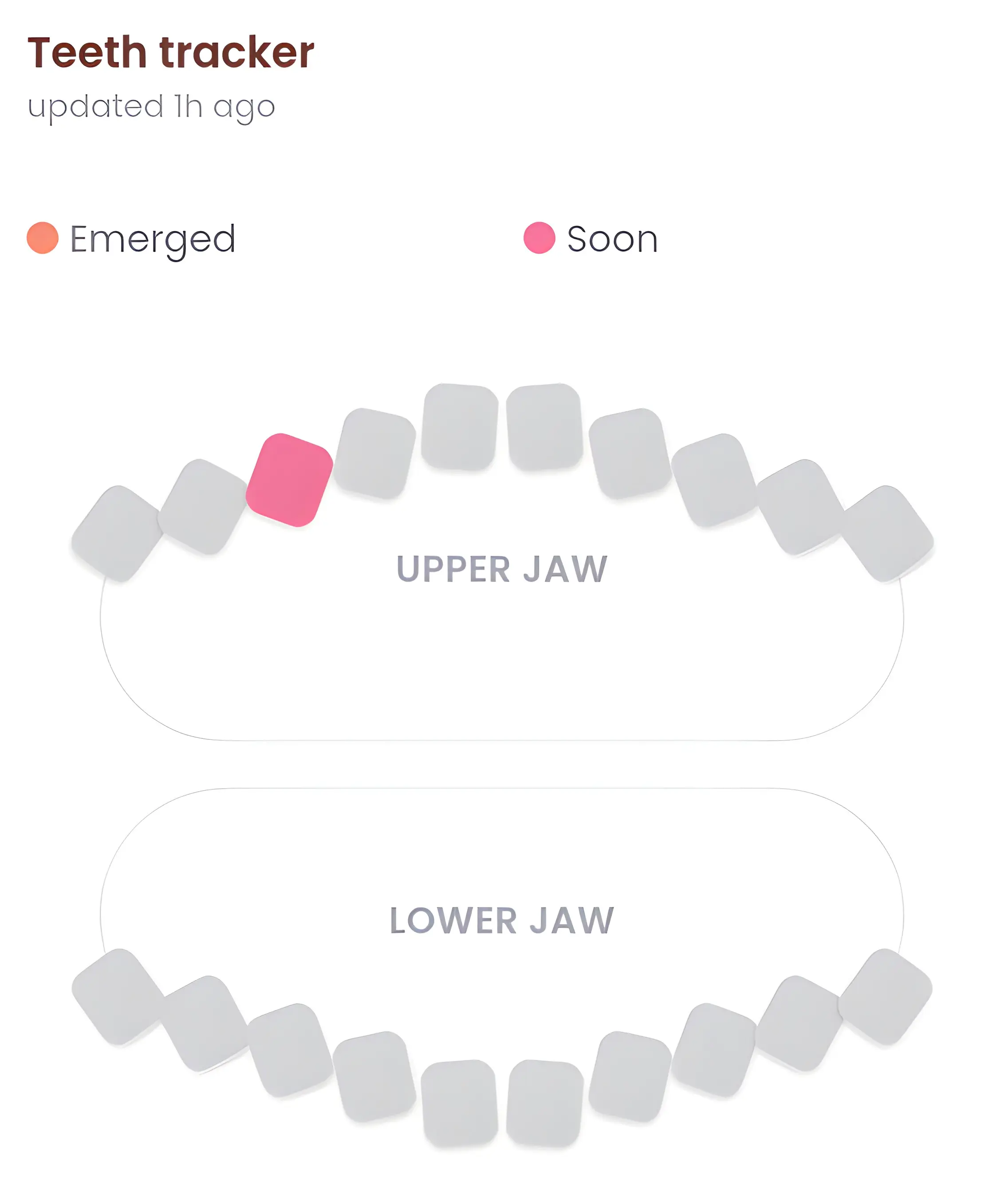
Why "Status-Only" Tracking Works Best:
- Low Friction: When you’re exhausted, tapping one button is feasible; taking a photo and tagging specific teeth is not. Consistency matters more than detail.
- Immediate Context: The status alone tells you everything you need to know about potential symptoms and dietary readiness.
- Family Sync: Grandparents often ask, "Any teeth yet?" Updating the status to "Emerged " instantly informs the whole family without needing to curate a photo album or manage group chats. They get the milestone update they crave, and you get peace of mind knowing everyone is informed.
Real-World Example:
Imagine your baby is 10 months old and suddenly stops sleeping.
- Without Tracking: You wonder, "Is it a growth spurt? An ear infection? Teething?" You spiral into worry.
- With Note Baby: You check the app. You logged "Coming Soon" three days ago. Ah, it’s the molars. You apply a chilled teether, comfort them, and know this phase will pass soon. The anxiety vanishes because you have data, not just guesses.
Conclusion: Data-Driven Parenting for a Healthier Smile
Tracking your baby’s teeth isn’t about creating a perfect scrapbook. It’s about proactive health management.
By simply observing and logging whether teeth are Coming Soon, None, or Emerged, you gain:
- Early warning signs for developmental delays.
- Clear context for behavioral changes and sleep issues.
- Confidence in advancing your baby’s diet safely.
- Timely reminders for oral hygiene and dental visits.
- Reduced anxiety through understanding your child’s unique pattern.
In a world of overwhelming parenting data, sometimes the simplest metrics provide the most profound insights. Don’t let these critical developmental cues slip away unnoticed.
Start Tracking Today with Note Baby
Ready to turn simple observations into powerful health insights? Note Baby makes it effortless to log teething status and share updates with your family, so you can focus on what matters most: your baby’s well-being.
👉 Download Note Baby at the Google Play Store and start logging your baby’s teeth progress in seconds.
Disclaimer: This article is for informational purposes only and does not constitute medical advice. Always consult your pediatrician or pediatric dentist regarding concerns about your child's dental development.