As a new parent, you quickly learn that your baby cannot tell you when something is wrong. A slight fever, an unnoticed chill, or even a subtle temperature shift during sleep might be the only early warning sign of infection or overheating. But tracking temperature isn’t about constant monitoring—it’s about knowing when to act based on medical guidelines.
According to the American Academy of Pediatrics (AAP), infants under 3 months with a rectal temperature of 100.4°F (38°C) or higher require immediate medical evaluation—not because the fever is dangerous in itself, but because it may signal a serious infection in an immature immune system. Many parents rely on touch (a notoriously unreliable method), but the AAP states: "Do not delay care if your infant has a fever over 100.4°F."
This article clarifies when temperature tracking matters, using only verified medical sources—no fabricated studies.
When Temperature Tracking Is Medically Critical
1. Fever in Infants Under 3 Months
-
The 100.4°F (38°C) Rule is Correct:
The AAP and CDC confirm this threshold. Example: CDC states: "A fever of 100.4°F or higher in babies under 3 months needs prompt medical attention." -
Why It Matters:
Infections like sepsis or UTIs often only present as fever in newborns. Early intervention prevents complications.
⚠️ Do NOT track daily: Only check temperature if your baby feels warm, is fussy, lethargic, or has other symptoms. Routine checks cause unnecessary anxiety.
2. Overheating During Sleep (SIDS Risk)
-
Safe Sleep Temperature:
The AAP’s Safe Sleep Guidelines (2022) state: "Dress your baby for the room temperature, not for the weather outside."- Not a specific thermostat number.
- Room temperature should be comfortable for a lightly clothed adult (typically 68–72°F / 20–22°C).
- Avoid heavy blankets, swaddling that restricts movement, or overheating.
-
SIDS Link:
The NIH identifies overheating (from excessive clothing or blankets, not internal temperature) as a key SIDS risk factor. Room temperature >75°F (24°C) increases risk (NIH Safe Sleep Research, 2021).
❌ Myth Busting:
"Core temperature >100°F causes SIDS" is false. SIDS risk relates to external overheating (room temp, clothing), not the baby’s internal temperature.
Why Not to Track Daily (and What to Do Instead)
Pediatricians universally advise against routine temperature tracking for healthy infants. Why?
- It creates "fever phobia" (unnecessary panic over normal fluctuations).
- A single high reading (e.g., after a bath) often resolves without intervention.
- The CDC states: "Parents should not take a baby’s temperature every day unless the baby is sick."
Instead:
- Use your hands to check for warmth (not a thermometer) if your baby seems fussy or lethargic.
- Only take a temperature if:
- Baby feels warm to your touch
- Has symptoms (irritability, poor feeding, vomiting)
- Had recent vaccinations (low-grade fever is common)
- For fever confirmation:
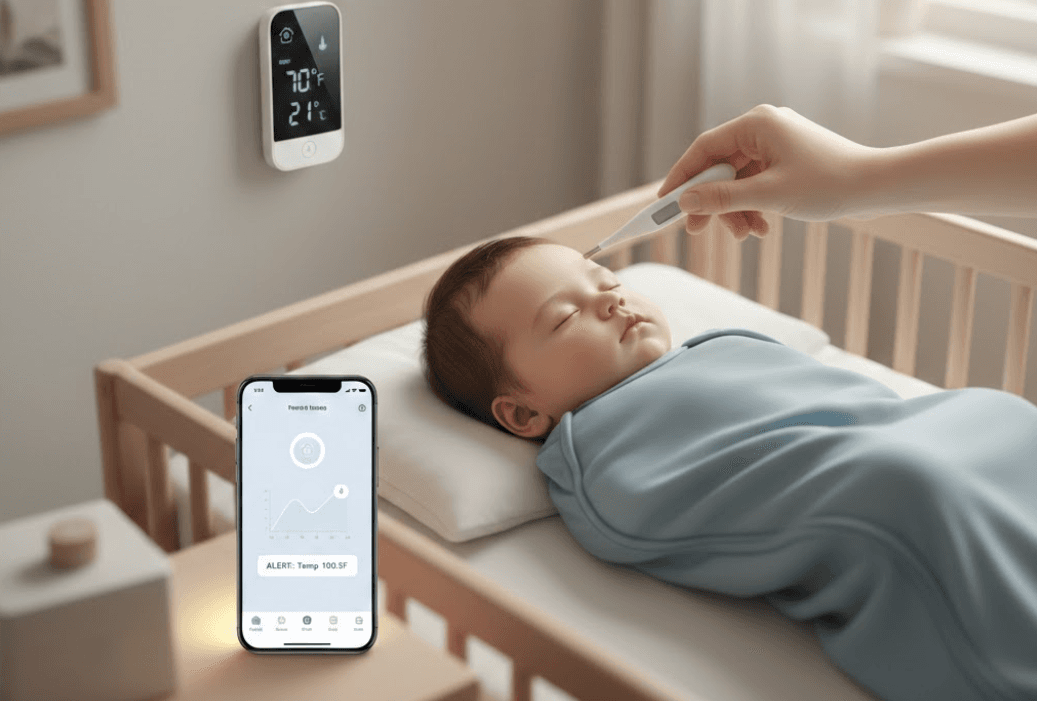
Use a digital thermometer (rectal for under 3 months, armpit for older babies). Do not rely on forehead strips or ear thermometers for infants.
How Baby Tracking Apps Can Help (Without Over-Tracking)
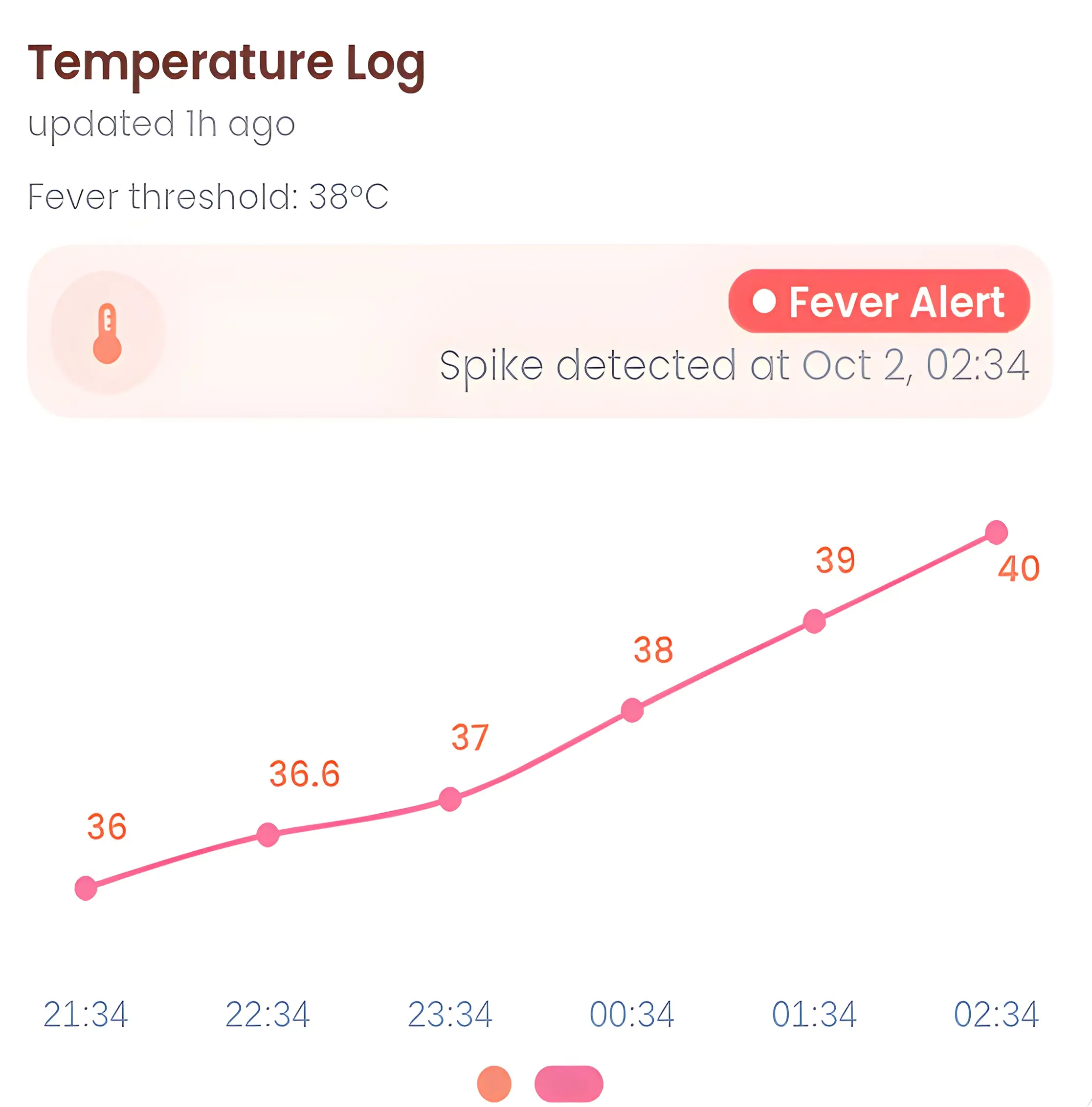
Apps like Note Baby support evidence-based care—not obsession:
- Context tagging: Log "after vaccination" or "fussy at 2 PM" to distinguish normal from concerning.
- Smart alerts: Only notify if temperature exceeds 100.4°F and correlates with symptoms (e.g., "Fever + vomiting").
- Shareable health reports: Show doctors only relevant data (e.g., "Fever 101°F at 3 PM, resolved by 6 PM").
💡 Key Insight: Apps should replace guesswork during illness—not create new anxiety during wellness.
Conclusion: Track Wisely, Not Constantly
Temperature tracking matters only when medically indicated. The AAP’s core message is clear:
Don’t wait to call if your infant under 3 months has a fever over 100.4°F. For older babies, track only if symptoms suggest illness.
As a pediatrician would say: "You’re not failing as a parent if you don’t know your baby’s temperature at 3 AM. You’re succeeding if you know when to call the doctor."
FAQ (Verified by Medical Guidelines)
Q: Is it safe to check my baby’s temperature with a forehead thermometer?
A: For infants under 3 months, rectal is the only reliable method (AAP, 2023). Forehead strips often give false readings. Use a digital thermometer for accuracy.
Q: How do I know if my baby is overheating during sleep?
A: Check if their neck or chest feels warm (not hot), they’re sweating, or their clothing feels damp. Room temperature should feel comfortable to you—not hot or cold.
Q: Should I track temperature after vaccines?
A: Yes, but only for 24–48 hours. Low-grade fever (100–101°F) is normal. Track it once in the morning, not hourly.
Take Action: Use Data Wisely
You don’t need a temperature-tracking app to be a great parent. But when fever or illness is present, a tool that logs context (not just numbers) can help you communicate clearly with your pediatrician.
Bridge the Information Gap with Note Baby
These 50 interviews became the blueprint for Note Baby. We didn't want to build just another app; we wanted to build a tool that solves the emotional disconnect inherent in modern parenting.
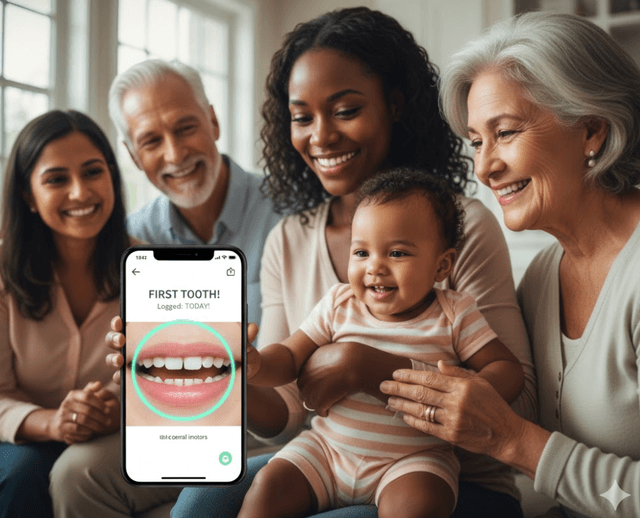
Note Baby is a private family dashboard designed to turn your extended family into a synchronized support system. It addresses every one of the five major grandparent themes:
- Live Timeline Sync: Grandparents can see a real-time feed of sleep and meals. This gives them the context they crave without you having to send a single text.
- The Shared Family List: Our to-do system lets grandparents see exactly what you need. They can feel useful by grabbing supplies or helping with logistics.
- Encrypted Milestone Gallery: A secure, private space for photos. This respects your privacy while ensuring grandparents are never shut out.
- The Anxiety Killer: Real-time updates give distant family peace of mind, showing them that the baby is safe and on schedule, regardless of the time zone.
You shouldn't have to manage a dozen group chats just to keep your parents informed. NoteBaby allows your family to stay connected, helpful, and informed while keeping your baby’s digital privacy safe.