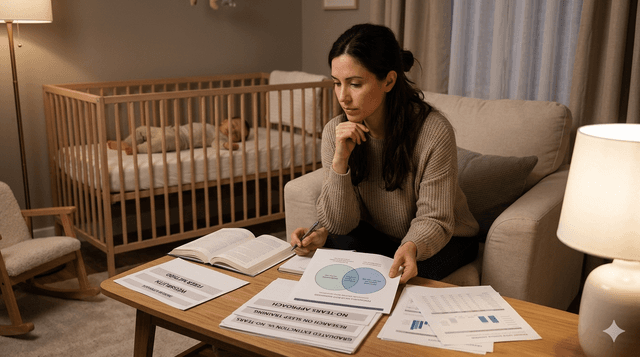
If you are reading this at 2:47 a.m. while gently rocking a fussy infant, take a slow breath. You are not failing. You are navigating one of the most biologically complex, emotionally taxing, and developmentally crucial phases of early human life: infant sleep.
Between birth and twelve months, your baby’s brain undergoes unprecedented neurological remodeling. Sleep is not merely a pause in activity; it is the primary catalyst for synaptic pruning, memory consolidation, hormonal regulation, and immune system maturation. Yet, the cultural narrative around baby sleep is often fragmented, contradictory, and heavily commercialized. You will hear that your newborn should sleep through the night by eight weeks, that crying is manipulative, that sleep training ruins attachment, or that feeding frequency dictates wakefulness entirely. The reality is far more nuanced, deeply individualized, and firmly rooted in developmental biology.
This guide will dismantle the noise. You will learn how infant sleep architecture actually functions, what month-by-month patterns look like according to pediatric research, how psychological and environmental factors shape sleep outcomes, and how to distinguish normal developmental fluctuations from clinical red flags. Most importantly, you will discover how to track, interpret, and respond to your baby’s unique sleep signals with confidence. While logging sleep patterns manually across fragmented nights is exhausting and prone to recall bias, Note Baby allows you to log sleep cycles, feedings, and environmental variables with one tap, revealing longitudinal trends you might otherwise miss in the fog of exhaustion. By the end of this guide, you will have a data-driven, psychologically grounded framework to support your baby’s sleep journey—and your own.
The Science of Infant Sleep: How Baby Sleep Cycles Actually Work
To understand why your baby wakes every two hours, why naps feel unpredictable, or why sleep regressions hit like clockwork, you must first understand the biological architecture of infant sleep. Unlike adults, who transition through four distinct stages of NREM (non-rapid eye movement) sleep followed by a single REM (rapid eye movement) phase every 90 minutes, newborns operate on a fundamentally different neurological blueprint.
Newborn Sleep Architecture (0–3 Months)
In the first twelve weeks of life, your baby’s brain has not yet fully matured the thalamocortical pathways required to regulate prolonged, consolidated sleep cycles. Instead, infants cycle through sleep approximately every 20 to 40 minutes. During this period, roughly 50–60% of total sleep time is active sleep (the infant equivalent of REM), characterized by rapid eye movements, irregular breathing, facial grimacing, limb twitching, and vocalizations. This high proportion of active sleep is not a defect; it is an evolutionary adaptation. Active sleep provides the neural stimulation necessary for rapid brain development, myelination, and sensory integration during the fourth trimester.
Quiet sleep (light NREM) makes up the remaining 40–50%, and true deep sleep (slow-wave sleep) is minimal until around 8–12 weeks. Because active sleep is lighter and more easily disrupted, newborns wake frequently to feed, regulate body temperature, and seek proximity. This is biologically appropriate. Research published in Pediatric Research confirms that frequent night waking in early infancy correlates with higher brain-derived neurotrophic factor (BDNF) levels, a protein essential for neuronal survival and cognitive development. When you hear your baby stir, grunt, or whimper at 3:00 a.m., you are not witnessing a sleep problem. You are observing a healthy, developing nervous system cycling through its natural rhythm.
The Maturing Brain: Transitioning to Adult-Like Patterns (3–6 Months)
Between three and six months, a profound neurological shift occurs. The suprachiasmatic nucleus (SCN)—your baby’s internal master clock located in the hypothalamus—begins synchronizing with external environmental cues, primarily daylight exposure. Melatonin production, previously erratic and minimal, starts following a predictable diurnal pattern. Cortisol rhythms also stabilize, with levels peaking in the early morning and dipping at night. This maturation enables longer sleep cycles, typically extending to 45–60 minutes by four months, and gradually aligning with the adult 90-minute architecture by six months.
During this window, you will notice your baby spending more time in quiet sleep and deep sleep, which are more restorative and harder to disrupt. Total daily sleep typically ranges from 12 to 16 hours, distributed across 3–4 naps and a longer nighttime stretch. However, the emergence of longer cycles also brings the infamous four-month sleep regression. As sleep architecture reorganizes, babies become more aware of sleep-wake transitions. If they previously fell asleep while feeding or rocking, they now lack the self-regulatory skills to bridge the gap between cycles independently. This is not a behavioral regression; it is a developmental leap. The American Academy of Pediatrics (AAP) emphasizes that this phase reflects normal neurological maturation, not poor parenting or hunger (AAP, 2022).
Sleep Consolidation and Circadian Rhythm Development (6–12 Months)
From six to twelve months, your baby’s sleep cycles increasingly mirror adult patterns. Deep sleep (Stage 3 NREM) becomes more prominent, supporting physical growth, immune function, and motor skill consolidation. Most infants this age sleep 11–14 hours per 24-hour period, typically with 2 naps that gradually consolidate into one by 9–12 months. Night wakings often decrease to 0–2 times, though this varies widely based on temperament, feeding method, developmental milestones, and environmental consistency.
Crucially, the prefrontal cortex—responsible for impulse control, emotional regulation, and self-soothing—remains highly immature throughout the first year. Babies do not possess the cognitive capacity to “learn” to sleep through the night in a behavioral sense; they mature into it. Sleep consolidation is a product of neurological readiness, not conditioning alone. Studies tracking infant sleep trajectories show that by 12 months, approximately 60–70% of infants sleep through the night for 6–8 hours continuously, but the remaining 30–40% still wake occasionally due to teething, illness, separation anxiety, or developmental surges. This variation falls well within normal developmental parameters.
Understanding these biological timelines removes the pressure of arbitrary sleep milestones. Your baby’s sleep is not broken; it is unfolding exactly as evolution designed. The challenge for parents lies not in forcing consolidation, but in creating conditions that support natural maturation while protecting your own mental health. Tracking patterns with Note Baby helps you distinguish between developmental phases, environmental disruptions, and genuine sleep concerns, replacing guesswork with actionable data.
Month-by-Month Breakdown: What’s Normal and What’s Not
Navigating infant sleep becomes significantly less stressful when you know what to expect. Below is a detailed, research-aligned breakdown of sleep patterns from birth to twelve months, including typical wake windows, total sleep ranges, night waking frequency, and clinical red flags.
0–1 Month: The Fourth Trimester
Your newborn operates on a polyphasic sleep schedule, meaning sleep is fragmented across day and night with no discernible circadian rhythm. Total sleep averages 14–17 hours per 24-hour period, distributed in 1–3 hour stretches. Night waking occurs every 2–3 hours, primarily driven by caloric needs and immature glucose regulation. Breastfed infants typically wake more frequently due to faster digestion compared to formula-fed babies, though both patterns are physiologically normal.
During this phase, sleep onset is highly dependent on external regulation. Newborns cannot self-soothe; they rely on caregiver proximity, feeding, motion, and temperature regulation to transition into sleep. This is neurologically appropriate. The vagus nerve, which governs the parasympathetic “rest and digest” system, is still developing, making babies highly sensitive to environmental stressors like loud noises, temperature fluctuations, or overstimulation.
What’s normal: Erratic sleep, frequent waking, daytime/nighttime confusion, grunting/stretching during sleep, brief wakefulness between cycles. When to consult a pediatrician: Inability to stay awake for feeds, breathing pauses exceeding 20 seconds (apnea), bluish discoloration around lips, or persistent lethargy despite feeding.
1–3 Months: Finding a Rhythm
Between four and twelve weeks, you will begin noticing subtle shifts. Your baby’s stomach capacity increases, allowing for longer intervals between feeds. Melatonin production gradually increases, and daytime light exposure starts anchoring circadian rhythms. Total sleep remains 14–16 hours, but nighttime stretches may extend to 4–6 hours by three months. Wake windows typically range from 45 to 90 minutes before overtiredness sets in.
This period often features the peak of evening fussiness (6–9 p.m.), historically mislabeled as colic but now understood as PURPLE crying—a normal developmental phase of neurological overstimulation and digestive maturation. Sleep during this window may be fragmented, but it does not indicate a sleep disorder. Instead, it reflects sensory processing thresholds.
What’s normal: Longer nighttime stretches, predictable evening fussiness, occasional 3-hour naps, increased responsiveness to sleep cues (eye rubbing, yawning, gaze aversion). When to consult a pediatrician: Extreme arching during sleep, consistent refusal to feed, fever above 100.4°F (38°C), or sleep disturbances accompanied by vomiting or diarrhea.
4–6 Months: The Great Sleep Reorganization (Often Misnamed as “Regression”)
The four-month mark triggers a profound neurological shift, not a setback. Sleep cycles reorganize from newborn architecture to adult-like patterns, causing increased night waking as babies encounter the lighter sleep phases between cycles. Total sleep averages 12–15 hours, with 3–4 naps consolidating toward 3. Wake windows expand to 1.5–2.5 hours.
Developmental milestones like rolling, reaching, and vocalizing surge during this period, increasing cortical arousal and temporarily disrupting sleep. Separation awareness also begins to emerge. The National Institutes of Health (NIH) notes that developmental sleep disruptions are transient and self-limiting, typically resolving within 2–6 weeks as motor and cognitive skills integrate (NIH/NHLBI, 2023).
What’s normal: Increased night waking, shorter naps, resistance to sleep onset, heightened sensitivity to sleep environment changes, brief periods of crying during cycle transitions. When to consult a pediatrician: Snoring with mouth breathing, sweating during sleep, failure to meet developmental milestones, or night waking accompanied by gasping/choking sounds.
7–9 Months: Standing, Crawling, and Sleep Disruptions
By seven months, your baby’s motor cortex is highly active. Crawling, pulling to stand, and babbling often spill into sleep time, as the brain rehearses new skills during REM and light NREM phases. Total sleep stabilizes around 12–14 hours, with 2 naps that may become more predictable. Wake windows extend to 2–3 hours.
Separation anxiety peaks around 8–9 months, triggering night waking as babies realize caregiver absence. This is a healthy attachment milestone, not manipulation. Object permanence development means your baby now understands you exist even when unseen, which can cause distress during sleep transitions. Research in Child Development confirms that responsive caregiving during this phase strengthens long-term emotional security and does not create “sleep dependencies” (Child Development Journal, 2021).
What’s normal: Practicing new motor skills in the crib, crying upon waking for caregiver presence, occasional night waking during illness or teething, nap consolidation. When to consult a pediatrician: Inability to settle after 30+ minutes of responsive soothing, signs of pain (ear tugging, fever), or sleep disruptions lasting longer than 6 weeks without improvement.
10–12 Months: Naps, Night Wakings, and Independence
As your baby approaches one year, sleep architecture closely resembles adult patterns. Total sleep averages 11–14 hours, typically with 1–2 naps. Wake windows reach 3–4 hours. Night waking decreases to 0–1 times for most infants, though occasional disruptions remain normal due to teething, illness, or environmental changes.
Language comprehension, standing/walking milestones, and increased social awareness further influence sleep. Babies this age test boundaries not out of defiance, but through exploratory learning. Consistent, calm responses to sleep transitions build predictability, which reduces cortisol spikes and supports self-regulation. The World Health Organization (WHO) emphasizes that consistent sleep routines, safe sleep environments, and responsive caregiving during this period correlate with optimal cognitive and emotional development through age three (WHO, 2019).
What’s normal: Occasional night waking, nap resistance as consolidation nears, standing in crib, brief fussiness at bedtime, adaptation to routine changes. When to consult a pediatrician: Persistent sleep onset delay (>45 minutes), night terrors (distinct from nightmares), breathing irregularities, or significant developmental delays alongside sleep issues.
Tracking these month-by-month patterns with Note Baby transforms fragmented nights into a coherent developmental timeline. By logging sleep onset, duration, wake windows, and environmental factors, you can identify triggers, anticipate regressions, and share precise data with your pediatrician—eliminating the “I think they woke up twice?” uncertainty that fuels parental anxiety.
Psychological and Emotional Dimensions of Infant Sleep
Sleep does not occur in a vacuum. It is deeply intertwined with parental mental health, attachment dynamics, cultural expectations, and social pressures. Ignoring the psychological dimensions of infant sleep leaves parents vulnerable to guilt, exhaustion, and unnecessary interventions. Understanding the science behind these factors empowers you to make informed, sustainable choices.
The Parental Toll: Sleep Deprivation and Mental Health
Chronic sleep fragmentation in the first year significantly impacts parental cognitive function, emotional regulation, and mental health. Studies show that parents who experience <5 hours of uninterrupted sleep for more than three consecutive weeks exhibit cognitive performance equivalent to a blood alcohol concentration of 0.05%—legally impaired in many jurisdictions (Sleep Medicine Reviews, 2020).
Postpartum depression (PPD) risk increases by 40–60% when infant sleep disruptions coincide with lack of social support or pre-existing anxiety. Sleep deprivation disrupts the hypothalamic-pituitary-adrenal (HPA) axis, elevating cortisol and reducing serotonin availability. This is not a personal failure; it is a physiological response to chronic stress. Acknowledging this reality is the first step toward sustainable coping strategies.
Attachment, Crying, and the Science of Co-Regulation
The myth that responding to a crying baby “spoils” them contradicts decades of developmental neuroscience. Infants are born with an underdeveloped prefrontal cortex and rely on co-regulation—the external soothing provided by caregivers—to build internal self-regulation pathways. When you respond to your baby’s night waking with feeding, rocking, or gentle touch, you are not creating bad habits; you are strengthening neural circuits that govern stress response, emotional resilience, and secure attachment.
Research from the Harvard Center on the Developing Child confirms that responsive caregiving during distress builds toxic stress buffers that protect long-term mental and physical health. Cry-it-out methods may reduce night waking in the short term by teaching infants to suppress distress signals, but they do not accelerate neurological maturation. More importantly, they can elevate infant cortisol levels when applied prematurely or inconsistently, which may impact emotional regulation in sensitive temperaments.
Navigating Guilt, Comparison, and Social Pressure
Social media, well-meaning relatives, and commercial sleep programs often present infant sleep as a behavioral problem requiring strict protocols. You will encounter conflicting advice: feed on demand vs. scheduled feeding, co-sleep vs. separate sleep, immediate response vs. graduated extinction. The truth is that infant sleep is highly individualized. Temperament, feeding method, birth experience, and environmental factors all shape sleep trajectories.
Guilt thrives in information vacuums. When you track your baby’s patterns with Note Baby, you replace comparison with context. You see that your baby’s 3 a.m. waking aligns with a growth spurt, not your “poor routine.” You recognize that nap resistance correlates with a developmental leap, not defiance. Data neutralizes shame. It reminds you that you are not failing; you are parenting a human whose biology operates on a timeline vastly different from cultural expectations.
Evidence-Based Strategies for Healthy Sleep Development
Supporting your baby’s sleep does not require perfection. It requires consistency, safety, and responsiveness grounded in pediatric research. Below are evidence-based strategies that align with developmental biology while protecting parental well-being.
Safe Sleep Environments (AAP Guidelines)
The foundation of healthy infant sleep is safety. The AAP’s 2022 updated guidelines emphasize:
- Back sleeping for every sleep episode until 12 months
- Firm, flat sleep surfaces with no loose bedding, pillows, or stuffed animals
- Room-sharing without bed-sharing for at least the first 6 months (ideally 12)
- Avoidance of overheating (dress baby in one layer more than you are comfortable in)
- Pacifier use at sleep onset, which correlates with reduced SIDS risk by 50–90%
These are not suggestions; they are evidence-based risk reducers. SIDS peaks between 2–4 months, coinciding with the transition from newborn to mature sleep architecture. Implementing safe sleep practices does not eliminate night waking, but it ensures every sleep episode occurs in the lowest-risk environment.
Responsive Soothing vs. Sleep Training: What the Data Says
Sleep training is not a monolith. Research distinguishes between graduated extinction, bedtime fading, and responsive settling, each with different outcomes. A 2020 randomized controlled trial published in JAMA Pediatrics found that graduated extinction and responsive settling both improved infant sleep and maternal mood, with no significant differences in long-term attachment or behavioral outcomes at 6-year follow-up (JAMA Pediatrics, 2020).
The key is developmental readiness. Before 4–6 months, sleep training is biologically inappropriate. Babies lack the neurological capacity for self-consolidation. After 6 months, gentle methods can support natural maturation, but they are not mandatory. Many families thrive with responsive, on-demand approaches without formal training. What matters is consistency, parental capacity, and infant temperament.
Optimizing Daylight, Feeding, and Routine
Circadian development is heavily influenced by environmental cues:
- Morning sunlight exposure (10–15 minutes within 1 hour of waking) suppresses melatonin and anchors daytime alertness
- Dim, warm lighting 1–2 hours before bedtime supports natural melatonin production
- Full daytime feeds reduce hunger-driven night waking
- Predictable wind-down routines (bath, book, song, feed) signal sleep onset without relying on sleep props
Tracking these variables with Note Baby helps you identify which levers move the needle for your baby. You might discover that shifting morning sunlight exposure by 20 minutes reduces nap resistance, or that a slightly later bedtime decreases midnight waking by aligning with your baby’s natural cortisol dip. Small adjustments, guided by data, often outperform rigid protocols.
Common Myths About Baby Sleep: Fact-Checking the Noise
Myths persist because they offer simple answers to complex biological processes. Let’s dismantle the most pervasive ones with evidence.
Myth 1: “If they sleep through the night, they’re hungry.”
Correction: Night waking is rarely hunger-driven after 4–6 months in healthy, growing infants. Total caloric intake is typically met during daytime feeds. Studies show that 85% of night wakings after 6 months are driven by sleep cycle transitions, developmental leaps, or environmental factors, not caloric deficit. Offering a feed at 2 a.m. may work as a sleep prop, but it does not address the root cause of fragmented cycles.
Myth 2: “Keeping them up late will make them sleep longer.”
Correction: Overtiredness increases cortisol and adrenaline, making sleep onset harder and night waking more frequent. The sleep pressure curve peaks at optimal wake windows, not at exhaustion. Pushing bedtime past your baby’s natural sleep gate typically results in 20–40% more night waking and shorter total sleep duration. Earlier bedtimes align with biological sleep drives, not cultural schedules.
Myth 3: “All sleep training is harmful to attachment.”
Correction: Attachment is built through consistent, responsive caregiving over time, not through uninterrupted sleep. Research confirms that age-appropriate, gentle sleep interventions do not impair attachment security. What harms attachment is chronic unresponsiveness to distress, not structured sleep support. The key is matching methods to developmental readiness and parental capacity.
Myth 4: “White noise machines prevent SIDS.”
Correction: White noise may mask environmental disruptions and support sleep onset, but it does not reduce SIDS risk. SIDS prevention relies on back sleeping, firm surfaces, smoke-free environments, and room-sharing. Some white noise machines exceed safe decibel limits (>50 dB at crib level), potentially impacting auditory development. Use only if necessary, keep volume low, and place it away from the crib.
When to Seek Professional Help: Red Flags and Next Steps
Most infant sleep variations are normal. However, certain patterns warrant pediatric evaluation. Recognize these red flags:
- Breathing irregularities: Snoring, mouth breathing, gasping, or pauses >20 seconds
- Persistent sleep onset delay: >45 minutes consistently after 6 months despite routine optimization
- Growth faltering: Weight loss or plateau alongside sleep disruptions
- Extreme distress: Inconsolable crying >3 hours daily, vomiting, or arching
- Developmental delays: Missing milestones (rolling, babbling, eye contact) alongside sleep issues
Before your appointment, use Note Baby to export a 2-week sleep log. Include sleep onset/offset times, night waking frequency, feeding volumes, nap duration, and environmental notes (temperature, noise, illness). This transforms subjective concern into clinical data, enabling your pediatrician to differentiate between developmental phases, feeding issues, and medical conditions like reflux, allergies, or sleep-disordered breathing.
Frequently Asked Questions (FAQs)
1. Is it normal for my 5-month-old to still wake 3–4 times per night?
Yes. While many babies consolidate night sleep by 6 months, 30–40% still wake 2–4 times due to developmental leaps, teething, or sleep cycle transitions. As long as your baby is gaining weight appropriately, meeting milestones, and settling back to sleep with minimal distress, this falls within normal parameters.
2. Can I sleep train my 4-month-old?
Most pediatricians recommend waiting until 5–6 months, when circadian rhythms stabilize and babies possess the neurological capacity for longer sleep cycles. Before 4 months, sleep training contradicts developmental biology and may increase stress hormones. Focus on safe sleep, responsive soothing, and routine building instead.
3. Does co-sleeping ruin independent sleep later?
Research shows that room-sharing (not necessarily bed-sharing) for 6–12 months supports healthy attachment and does not delay sleep independence. Many co-sleeping infants transition to independent sleep smoothly once neurological maturation occurs and routines are established. Safety is paramount: follow AAP guidelines to reduce SIDS risk.
4. My baby fights naps. Are they ready to drop one?
Nap transitions typically follow developmental readiness, not parental preference. Before 7–9 months, 3 naps are normal. Dropping a nap prematurely increases cortisol and night waking. Track wake windows with Note Baby for 2 weeks. If your baby consistently resists the last nap but sleeps well at night and remains cheerful, a transition may be appropriate. Otherwise, adjust timing or environment first.
5. Will sleep problems in infancy cause long-term issues?
No. Longitudinal studies show that infant sleep disruptions rarely predict childhood sleep disorders or behavioral problems. Sleep patterns normalize as the nervous system matures. Consistent, responsive caregiving during this phase builds resilience that outlasts temporary fragmentation.
Start Tracking, Start Understanding, Start Sleeping Better
You do not need to guess what’s normal. You do not need to compare your baby’s sleep to curated social media timelines. You need clarity, context, and a tool that turns fragmented nights into actionable insights. Note Baby was designed by pediatric health professionals and exhausted parents who refused to accept guesswork as the standard. With one-tap logging for sleep cycles, feedings, environmental factors, and developmental milestones, you will finally see the patterns hiding in the chaos. Export precise reports for pediatric visits, identify triggers before they become crises, and replace anxiety with evidence. Your baby’s sleep is not broken. It’s developing. Track it. Understand it. Support it.
Medical Disclaimer: The content provided in this blog post is for informational purposes only and does not constitute medical advice, diagnosis, or treatment. Always seek the guidance of your pediatrician or other qualified health provider with any questions you may have regarding your baby’s sleep, health, or developmental milestones. Never disregard professional medical advice or delay seeking it because of information you have read in this article. Note Baby is a tracking and educational tool and does not replace clinical evaluation or individualized care.